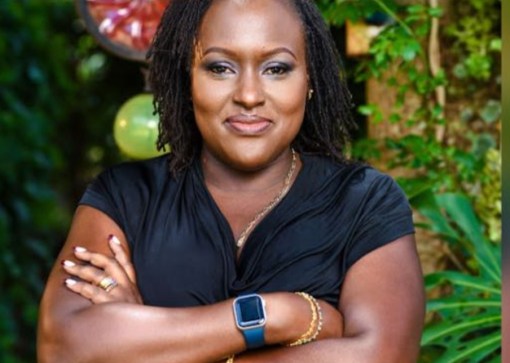
By Julie Githiri
After the quiet realisation that COVID 19 was not three years ago but nearly seven, have you paused to ask yourself what you have actually built, shifted, or become since then?
Seven years.
It feels both like yesterday and another lifetime.
That period forced us into something few of us were prepared for: collective upheaval. Loss sat at our tables. Fear became a daily companion. The illusion of control dissolved almost overnight.
It was all on the menu.
Our mental health absorbed the impact. Anxiety normalised itself. Depression disguised itself as fatigue. Relationships, romantic, familial, even friendships were placed under a magnifying glass. Some cracked under pressure during lockdown. Others survived, only to quietly unravel later. Proximity does not always equal intimacy. And survival does not always mean growth.
Seven years is often culturally referenced as the “itch” period. The point at which comfort turns to restlessness. Where familiarity begins to feel restrictive. Where the question forms, is this it?
So, what is your itch this year?
Is it your career? The role that once felt prestigious but now feels performative?
Is it your body neglected, overworked, uncelebrated?
Is it the relationship you are maintaining out of loyalty rather than vitality?
Is it the version of yourself you’ve outgrown?
Everything feels up for evaluation.
In many African and diasporic cultures, endurance is praised. Stability is admired. Respectability is currency. We are taught to maintain marriages, reputations, roles even when something inside us quietly withers.
But what if maintenance is not the same as alignment?
What if this season is asking you not to preserve but to reassess?
There is a provocative line from the film Outlast: “Let it burn. Burn the whole thing down.”
It sounds reckless. Dramatic. Dangerous.
But sometimes burning is not destruction… it is transformation.
Forest fires, while devastating, create fertile ground for regeneration. Old growth makes space for new life. What if some parts of your life are not meant to be sustained, but surrendered?
What do you have to lose?
That question is confronting. Because often what we have to lose is not the relationship, the job, or the status, it is identity.
Maybe the real discomfort of the last seven years is not what happened externally, but what surfaced internally.
Maybe you discovered that you no longer like the version of yourself you became in order to cope.
Or perhaps more painfully, you realised who you never allowed yourself to become at all.
That realisation can sting, like a mwiko (wooden spoon) striking across wet legs. Sharp. Immediate. Unavoidable. It jolts you awake.
But jolts are not punishments. They are invitations.
Starting again, however, is terrifying.
Especially if you are someone who prides yourself on being composed. In control. Strategic. The dependable one.
Let’s talk about control.
For many high-functioning adults particularly those raised in environments where uncertainty was unsafe, control feels like protection. If you decide how, when, and where something unfolds, you reduce risk. You minimise chaos.
Right?
Actually …not quite.
Control can also be a sophisticated form of fear.
Fear of vulnerability.
Fear of failure.
Fear of visibility.
Fear of needing something that may not be reciprocated.
The pandemic taught us something uncomfortable: control is often an illusion.
We could not control infection rates. We could not control economic shifts. We could not control how others responded to stress. What we could control sometimes barely, was our own response.
And even that felt fragile.
So perhaps the real growth of the last seven years is not about what you achieved promotions, partnerships, property, but about how you adapted.
Did you harden?
Did you soften?
Did you numb?
Did you awaken?
For some of you reading this, the idea of “burning it down” feels liberating. For others, it feels irresponsible. Especially within cultural frameworks where family expectations, communal identity, and generational sacrifice are deeply woven into decision-making.
The tension between personal freedom and collective responsibility is real.
But growth does not always require demolition.
Sometimes it requires truth.
Truth about what no longer fits.
Truth about what you desire.
Truth about the ways you have abandoned yourself in order to belong.
The seven-year itch is not always about leaving. It is about examining.
Maybe your itch is not your partner but your unexpressed needs.
Maybe it is not your job but your underused talent.
Maybe it is not your body but your relationship to it.
Maybe the thing that needs to “burn” is not your life, but the narrative you have been living inside.
Letting go of control does not mean recklessness. It means recalibration.
It means trusting that uncertainty is not inherently dangerous.
It means allowing yourself to become someone slightly unfamiliar.
And yes that can feel destabilising.
But it can also feel alive.
Seven years ago, the world shifted without asking our permission.
This time, perhaps, you get to choose the shift.
So as you stand in this post-pandemic landscape, ask yourself not just what you have achieved but who you have become.
And more importantly who you are ready to be.
Because sometimes things do need to burn.
Not to destroy you.
But to reveal you.
Warmly
Jules
 conversationwithjules