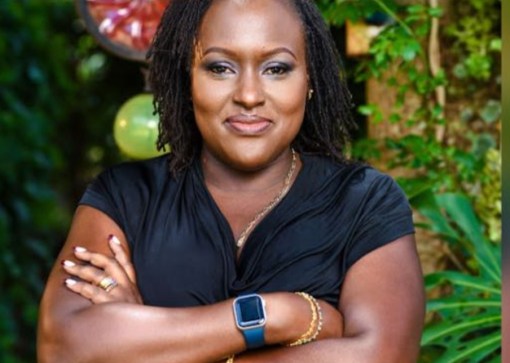
The Question Beneath the Question

I was recently sitting with a dear friend, discussing the existence of big love, great love.

He spoke about it with such passion that I could almost feel it myself. The memory of it left his heart fluttering, his skin tingling, goosebumps rising on his arms. His breath became deeper, more deliberate, as though the very act of remembering brought him back into its presence.

Listening to him describe an experience that seemed to transcend all rational thought, I found myself wondering whether this is the love we are all searching for. The kind of love where oxytocin checks in and logic quietly leaves the chat. The kind that rearranges your inner landscape without permission.

But is that what makes a love great?

Is it the intensity of feeling? The all-consuming desire? The inability to think clearly in the presence of another?

Or is it something altogether different?

Perhaps great love is not simply about being known, but about being felt. Not only in the physical sense, but emotionally. A meeting of minds, hearts, histories and hopes. A place where two people recognise something familiar in one another and choose to stay curious about what they find.

For centuries we have attempted to define love. The Greeks gave us Eros, the passionate and erotic; Agape, the selfless and unconditional; Ludus, the playful and flirtatious; Pragma, the enduring love that grows through commitment and shared experience.

Yet perhaps, like life itself, love refuses to remain fixed.

Love evolves.

The intoxicating rush of Eros may soften into the steady reassurance of Pragma. Playfulness may deepen into devotion. Desire may ebb and flow, whilst intimacy grows roots beneath it. The love we experience at twenty is rarely the same love we seek at fifty.

And perhaps that is the question worth asking.

Is great love the one that takes our breath away?

Or is it the one that teaches us how to breathe more deeply?

When someone enters my consulting room, more often than not, this is the question hiding beneath the question.

Not “How do I fix my relationship?” or “Why did they leave?” or even “Do they love me?”

The question is simpler, and infinitely more complex:

Am I loved?

If our eyes are the windows to the soul, and the soul is the keeper of the heart, then surely the health of that heart matters. Not simply the organ beating faithfully within our chest, but the emotional heart, the one that longs, grieves, hopes, and connects.

Surely a heart that feels at peace, seen, and secure stands a better chance of flourishing?

It sounds like simple mathematics.

Yet human beings have never been particularly rational when it comes to love.

Interestingly, this same question follows me beyond the consulting room. Whether professionally or socially, conversations about love seem to emerge with remarkable ease. Friends, strangers, clients all circling the same curiosity. I appear to have a knack for creating spaces where such conversations unfold.

And perhaps that is because love sits at the centre of so much of what it means to be human.

Across centuries and cultures, we have been captivated by it.

Romeo and Juliet became the enduring symbol of passionate, tragic devotion. Emperor Shah Jahan built the Taj Mahal in memory of Mumtaz Mahal, creating one of the world’s greatest monuments to love and loss. Even our sacred texts are filled with stories of longing, desire, betrayal, sacrifice, and devotion. Samson and Delilah remind us that love can both strengthen and deceive.

Songs have been written about it.
Poems have worshipped it.
Artists have painted it.
Writers have chased it across generations.

Love has inspired wars, reconciliations, migrations, and revolutions of the heart.

In many ways, love may well be the greatest currency on the planet.

Not because it can be bought or sold, but because nearly every human decision is influenced by our pursuit of it, our experience of it, or our recovery from its absence.

Which brings me back to the original question.

Is love what makes the world go round?

Or is it the hope of being loved that keeps us moving?

Warmly 

Jules

Grey Divorce- The Late Arrival of Emotional Truth.

The term grey divorce was coined to describe couples, often married for over twenty years, who choose to separate later in life. They have built homes together, raised children, established careers, cultivated friendships, and created entire ecosystems of family and community. Yet somewhere beyond the age of fifty, and increasingly beyond sixty-five, many are arriving at the same conclusion:

“This marriage is no longer working for me.”

For some, this can feel difficult to understand. Surely after forty years of marriage, one stays. One adjusts. One continues.

And yet the reasons people leave later in life are often deeply human. Many reach a stage where they become acutely aware that they have lived more years than they may have remaining. With that awareness comes reflection. Questions around joy, fulfilment, peace, companionship, desire, freedom, and emotional aliveness begin to surface with greater urgency.

There is often a longing for more of something in the years that remain.

More connection.
More happiness.
More selfhood.

But what happens to the partner who is left behind?

For many, their identity, stability, and happiness have become intertwined with the marriage itself. The ending of the relationship can feel like the dismantling of an entire life structure. One person’s liberation can feel like another person’s loss.

Clinically, I increasingly meet clients navigating this very dilemma. Whose feelings matter most? The person leaving? The partner staying? And what of the adult children, who themselves hold emotional investments in the family remaining intact?

This triangulation of feelings is profoundly complex. Every member of the family system is affected by the rupture of what once felt stable and permanent.

Yet in truth, the person whose feelings often matter most is the one making the decision.

What I have observed repeatedly in the clinical space is that when someone finally verbalises their desire to leave, the decision has rarely been impulsive. More often, it has been preceded by months, sometimes years, of internal dialogue. They have wrestled privately with guilt, fear, responsibility, hope, grief, and freedom long before speaking the words aloud.

As a psychotherapist, my role is not to tell someone whether to stay or leave. Rather, it is to explore the “why now?” To understand the emotional landscape surrounding the decision, the links to significant past relationships, familial attachments, internal guilt mechanisms, fears, and desires.

I explore what freedom means to them.
What joy means to them.
What they believe they are losing, and what they hope they may still find.

But the instruction of “do not go” is not within my professional scope. Nor should it be.

How could I impose my personal opinion on a decision someone may have been carrying, silently and painfully, for years?

Sometimes grey divorce is not simply about the ending of a marriage.

Sometimes it is about the late arrival of emotional truth.

Warmly 

 Jules 

Before We Knew Love, We Felt It

Parental relationships must be some of the most frequently explored familial dynamics in therapy. There is a need for deeper interrogation, not only of the love that was present, but of the care that was absent, inconsistent, or withheld.

As a baby, one of the first forms of communication is through tears. You arrive into the world crying, and more often than not, you are met with relief, love, gratitude, even awe. You are gathered into arms, held close to the bosom, encouraged to suckle and so begins your first relationship with the adults who will become your parents.

Touch becomes your earliest language.

You are bathed, soothed, winded, changed. Each act carries the possibility of tenderness: a soft voice, a gentle caress, the rhythm of reassurance. A kind of closeness that does not need to be earned. A connection that exists without transaction.

But not all touch is experienced in the same way.

For some, it is warm, attuned, and consistent a foundation upon which safety is built. For others, it may be hurried, inconsistent, or absent altogether. And in some cases, touch itself becomes confusing something that does not quite match the emotional need beneath it.

These early exchanges so ordinary, so easily overlooked begin to shape something profound.

They inform how we come to understand safety, closeness, love, and ultimately, ourselves.

Because before we had language, we had sensation. Before we had meaning, we had experience. And we had our bodies, long before the mind begins to remember what it means to be held, or not.

And it is this body that grows up.

This same body enters adulthood carrying an internal blueprint of intimacy one that is rarely conscious, yet deeply influential. When we begin to form romantic and sexual relationships, we are not starting from a blank slate. We are, in many ways, returning to something familiar.

But familiarity is not only personal. It is also cultural.

Across many African households, love has often been expressed through provision, responsibility, and sacrifice, rather than overt emotional or physical tenderness. A parent’s love may be unquestionable, yet not always verbally affirmed or physically demonstrated beyond what was necessary. Strength, respect, and endurance are prioritised sometimes at the expense of softer expressions of care.

In British contexts, there may be a different tension. Emotional expression may be more permitted, yet still shaped by restraint, independence, and an unspoken expectation to “hold oneself together.” Affection exists, but often within quiet boundaries.

For many of us living between cultures, these messages intertwine.

We may have been deeply loved but not always held in ways that our bodies could easily recognise as soothing or safe. Touch may have been functional rather than affectionate. Emotional needs may have been met with practicality rather than attunement.

And so, as adults, we carry not only our personal histories but cultural inheritances of love.

This is where intimacy becomes layered.

Some may long for closeness yet feel uncertain when it arrives.
Some may equate love with sacrifice rather than emotional presence.
Some may struggle to receive tenderness without questioning its permanence.

And in sexual relationships, these patterns often deepen.

Because sex is one of the few spaces where touch becomes intentional, prolonged, and emotionally charged. It asks the body to soften, to receive, to be seen not just physically, but psychologically.

Yet if the body has not learned that closeness is consistently safe, it may:

Tense instead of soften

Disconnect instead of remain present

Seek reassurance while simultaneously fearing dependence

This is not contradiction. It is conditioning.

In therapy, we begin to understand that many of our adult relational patterns are not simply about the present partner, but about the intersection between early attachment and cultural messaging.

The woman who struggles to ask for emotional needs may have been raised to value strength over vulnerability.
The man who withdraws from intimacy may have learned that emotional expression is a risk rather than a resource.
The couple who love deeply yet struggle to settle may both be navigating inherited ideas about what love should look like.

To be intimate, then, is not only to meet another person.

It is to meet
your history,
your body,
your culture,
and the quiet, inherited rules you may never have consciously chosen.

This is why intimacy can feel so powerful why it can soothe, undo, and awaken in equal measure.

And why, at times, it can leave you feeling exposed in ways you cannot quite name.

Because somewhere within the adult body lives the memory of the child
the one who learned what love felt like,
or what it did not.

The one who learned whether closeness was safe,
whether touch could be trusted,
whether presence would stay.

So when you find yourself leaning in…
or pulling away…
softening… or bracing…

perhaps it is not confusion.

Perhaps it is memory.

Not always conscious.
Not always clear.
But present, nonetheless.

And so the invitation is gentle.

To become curious, rather than critical.
To notice, rather than judge.
To listen not only to the mind, but to the body that has been speaking all along.

Because intimacy is not something we simply learn once.

It is something we unlearn, return to, and reshape again and again.

And maybe, just maybe,
love in adulthood is not about getting it right…

but about learning how to stay
soft enough to feel,
steady enough to remain,
and open enough to experience love
in a way that is no longer bound only by where we began.

Warmly

Jules

The Boy Behind the Man

Reclaiming the Emotional Lives of Men


In the clinical space, I have the opportunity to work with both couples and individuals. Perhaps surprisingly, or maybe not, the individual work tends to be largely with men. Men do seek out therapy. They also crave a safe space to express their inner thoughts.

The presenting issues vary widely. They may arrive with questions around identity, imposter syndrome, self-worth, or sexual intimacy. The scope of engagement is rich. Yet across my work whether in the UK, Kenya, Japan, Sweden, or Sierra Leone, the underlying thread is strikingly consistent.

At the root of it all is a desire to be wanted, to be loved, to be emotionally held and understood.

When we think about the boy child and his introduction to the world, it is often marked by expectation. There is an assumption of strength, a quiet but firm narrative that he must grow into a man who provides, partners, procreates, and protects. Across cultures, the messaging is remarkably similar:

“You can do it.”
“You must do it.”

But what happens to the inner child in all of this?

What happens to the soft-spoken boy who longs to be reassured, to be held, to be told he is enough? What happens to the boy who cries when he is emotionally hurt, who struggles to articulate what he truly feels, who does not quite know how to share his inner world?

As he grows, that boy becomes a man navigating the demands of life the pressure to succeed, to provide, to ensure that his family does not lack. While we might assume that men can turn to their peers for emotional support, the reality is often more complex. Vulnerability within male spaces can feel risky. It can carry the threat of inadequacy, or even ridicule.

So much is left unsaid.

What is often communicated instead is a desire for respect and appreciation. On the surface, this can seem like a simple request. But within relationships, it can quickly become a point of tension.

“Why should I?”
“He hasn’t earned it.”

And yet, when we look more closely at what causes relationships to fracture, we often find something less visible, but deeply impactful.

Ego.

It is one of the most consistent contributors to the breakdown of connection the quiet force that chokes what was once held, openly and tenderly, by the heart.

To be in the clinical space with a man who has spent much of his life battling to feel heard, learning the language to express his fears, interrogating his familial relationships, and exploring both maternal and paternal bonds, is to witness something deeply human.

It is to sit with a man who is, often for the first time, grieving a version of himself the one who adapted, who shaped himself in order to be accepted by society.

You might ask, what is the point of all this? Why dismantle one’s emotional self, especially when these shifts so often occur in midlife?

And the question I would offer in return is: why wouldn’t you?

Why wouldn’t you choose to expand your emotional wellbeing? To reconnect with the little boy who simply wanted to be loved and reassured, who was whole and enough before the weight of expectation was placed upon him?

Why not allow yourself the possibility of deep, heartfelt relationships ones that ignite something within you? The capacity to feel, to connect, to experience desire, to be fully alive and responsive to life itself.

To integrate this version of yourself is to offer your relationships something real, an authentic presence, grounded in vulnerability rather than performance.

It is not an easy ask.

But you are the man who can ask himself, “Am I worth it?”

And the answer, whether you have heard it before or not, remains the same:

Yes. You are.
You always were.

Warmly Jules

Are you living your best life?

If you were to evaluate the life you’re living, what would it say about you?

What actually matters to you? Have you been impactful? Have you studied what felt meaningful? Are you building a career that feels like yours? Have you made the kind of money that gives you both comfort and freedom? Have you created a home, a life, a sense of stability?

And then the more intimate questions begin to surface. Have you loved deeply? Have you allowed yourself to be loved? Have you experienced the kind of connection, emotional, physical, and spiritual, that you once imagined for yourself? And, perhaps most confronting of all, was it worth it?

Are you, truly, living your best life?

We often assume the ingredients of a good life are found in achievement, experience, and accumulation. These things do shape identity, create stories, and offer a sense of progress. But as life unfolds, something begins to shift.

The older we get, the more a quieter truth emerges: health is wealth.

Not just physical health, but emotional, relational, and psychological wellbeing. In the clinical space, this shift becomes increasingly visible. Conversations are no longer only about ambition or potential, but about aging, decline, and the weight of caregiving. Parents who once carried everything are now the ones needing to be held.

This brings us to a deeper reflection on generations.

The so-called silent generation, those who paved the way, carried families, and made sacrifices that shaped entire futures, often did so without the language of emotional expression. They were not equipped to explore their inner worlds, to express desire freely, or to make decisions based on personal wants. They carried responsibility, deep and unwavering. Failure was not an option. There was too much at stake.

But with that level of responsibility comes a question we are only now beginning to ask. What was the cost?

What happens to a nervous system that learns to prioritise duty over feeling? What happens to a person when emotions are consistently suppressed in favour of survival, stability, and expectation?

Many in that generation did what they had to do. They endured. They provided. They succeeded by the standards available to them. But often, they did so by burying parts of themselves.

And then come their children.

A generation raised by people who loved deeply but did not always have the tools to express that love in emotionally attuned ways. What is inherited in that space is complex. There is resilience, but also emotional silence. There is strength, but sometimes disconnection. There is provision, but not always presence.

Now, newer generations are turning toward something different. They are asking themselves how they feel, what they want, and what a healthy life actually looks like. They are prioritising mental health, boundaries, and self-awareness, sometimes in ways that challenge everything that came before.

So we arrive back at the question. What does it mean to live your best life?

Is it achievement? Is it freedom? Is it connection? Is it health? Or is it the ability to live a life where your body is not in constant survival, where your emotions have space to exist, where your relationships feel safe and real, and where your choices reflect who you truly are?

Maybe the real best life is not about having everything. Maybe it is about not having to abandon yourself in the process of living it.

From here, another question begins to take shape.

How do we now care for those who came before us?

How do we hold the silent generation at this stage of life in a way that lets them know they are loved, they are worthy, they matter, and that what they have done, and who they have been, still holds meaning?

This is not a simple or idealistic question.

Because the truth is, not all parent–child relationships are easy. Not all are warm. Not all are safe. For many, the relationship has always been complicated, marked by distance, misunderstanding, or emotional absence. In some cases, the loss did not begin with death. It began years earlier, in what was never said, never felt, never repaired.

So this cannot be approached with rose-tinted thinking. Care, in this context, has to be honest.

To care for this generation is not always to feel close. Sometimes, it is simply to choose presence where you can. It might be sitting beside them, even in silence, or listening to the same stories repeated over and over again. What may feel repetitive can be their way of holding onto identity, making sense of their life, or simply staying connected.

Care does not always have to be grand or emotionally expressive. For this generation especially, love is often understood through consistency, through time given, through practical support. Sometimes, being able to hold steady, to tolerate the discomfort, the slowness, even the emotional distance, is enough.

There is also something quieter and perhaps more profound. To care for them is to begin to see them as people, not just as parents. People who carried burdens we may never fully understand, who made choices within the limits of their time, and who lived lives shaped by duty, not always by desire.

This does not erase the impact they may have had. It does not dismiss hurt. It does not require a rewriting of one’s own experience. But it can allow space for a different kind of holding, one that is boundaried, but humane.

Maybe care, at this stage, is not about fixing the relationship. Maybe it is about asking what is possible here, now, and meeting that honestly.

Because in the end, being able to sit with them, to listen, to remain, even in small ways, might be one of the most meaningful forms of love we can offer.

Warmly

Jules

Seven Years Later.. What are you prepared to burn?

By Julie Githiri

After the quiet realisation that COVID 19 was not three years ago but nearly seven, have you paused to ask yourself what you have actually built, shifted, or become since then?

Seven years.

It feels both like yesterday and another lifetime.

That period forced us into something few of us were prepared for: collective upheaval. Loss sat at our tables. Fear became a daily companion. The illusion of control dissolved almost overnight.

It was all on the menu.

Our mental health absorbed the impact. Anxiety normalised itself. Depression disguised itself as fatigue. Relationships, romantic, familial, even friendships were placed under a magnifying glass. Some cracked under pressure during lockdown. Others survived, only to quietly unravel later. Proximity does not always equal intimacy. And survival does not always mean growth.

Seven years is often culturally referenced as the “itch” period. The point at which comfort turns to restlessness. Where familiarity begins to feel restrictive. Where the question forms, is this it?

So, what is your itch this year?

Is it your career? The role that once felt prestigious but now feels performative?
Is it your body neglected, overworked, uncelebrated?
Is it the relationship you are maintaining out of loyalty rather than vitality?
Is it the version of yourself you’ve outgrown?

Everything feels up for evaluation.

In many African and diasporic cultures, endurance is praised. Stability is admired. Respectability is currency. We are taught to maintain marriages, reputations, roles even when something inside us quietly withers.

But what if maintenance is not the same as alignment?

What if this season is asking you not to preserve but to reassess?

There is a provocative line from the film Outlast: “Let it burn. Burn the whole thing down.”

It sounds reckless. Dramatic. Dangerous.

But sometimes burning is not destruction… it is transformation.

Forest fires, while devastating, create fertile ground for regeneration. Old growth makes space for new life. What if some parts of your life are not meant to be sustained, but surrendered?

What do you have to lose?

That question is confronting. Because often what we have to lose is not the relationship, the job, or the status, it is identity.

Maybe the real discomfort of the last seven years is not what happened externally, but what surfaced internally.

Maybe you discovered that you no longer like the version of yourself you became in order to cope.

Or perhaps more painfully, you realised who you never allowed yourself to become at all.

That realisation can sting, like a mwiko (wooden spoon) striking across wet legs. Sharp. Immediate. Unavoidable. It jolts you awake.

But jolts are not punishments. They are invitations.

Starting again, however, is terrifying.

Especially if you are someone who prides yourself on being composed. In control. Strategic. The dependable one.

Let’s talk about control.

For many high-functioning adults particularly those raised in environments where uncertainty was unsafe, control feels like protection. If you decide how, when, and where something unfolds, you reduce risk. You minimise chaos.

Right?

Actually …not quite.

Control can also be a sophisticated form of fear.

Fear of vulnerability.
Fear of failure.
Fear of visibility.
Fear of needing something that may not be reciprocated.

The pandemic taught us something uncomfortable: control is often an illusion.

We could not control infection rates. We could not control economic shifts. We could not control how others responded to stress. What we could control sometimes barely, was our own response.

And even that felt fragile.

So perhaps the real growth of the last seven years is not about what you achieved promotions, partnerships, property, but about how you adapted.

Did you harden?
Did you soften?
Did you numb?
Did you awaken?

For some of you reading this, the idea of “burning it down” feels liberating. For others, it feels irresponsible. Especially within cultural frameworks where family expectations, communal identity, and generational sacrifice are deeply woven into decision-making.

The tension between personal freedom and collective responsibility is real.

But growth does not always require demolition.

Sometimes it requires truth.

Truth about what no longer fits.
Truth about what you desire.
Truth about the ways you have abandoned yourself in order to belong.

The seven-year itch is not always about leaving. It is about examining.

Maybe your itch is not your partner but your unexpressed needs.
Maybe it is not your job but your underused talent.
Maybe it is not your body but your relationship to it.

Maybe the thing that needs to “burn” is not your life, but the narrative you have been living inside.

Letting go of control does not mean recklessness. It means recalibration.

It means trusting that uncertainty is not inherently dangerous.

It means allowing yourself to become someone slightly unfamiliar.

And yes that can feel destabilising.

But it can also feel alive.

Seven years ago, the world shifted without asking our permission.

This time, perhaps, you get to choose the shift.

So as you stand in this post-pandemic landscape, ask yourself not just what you have achieved but who you have become.

And more importantly who you are ready to be.

Because sometimes things do need to burn.

Not to destroy you.

But to reveal you.

Warmly 

Jules

Oscillation: When Love Doesn’t Land

By Julie Githiri

Can it be as simple as incompatibility?

Attraction might be there.
Sexual chemistry might hum beneath the surface.
The body responds. The eyes linger. The conversation flows.

And yet there is something.

Something unnamed.
Something that does not fully settle in the nervous system.
A quiet internal knowing: this isn’t it.

They are not the person you instinctively want to be fully vulnerable with. Not the one you feel safe unravelling beside. Not the one you trust with your softer edges sexually or emotionally.

In many cultures particularly within African and diasporic communities’ compatibility is often measured through visible markers: family background, faith, education, reputation, culture, profession. Attraction may be secondary. Stability is prioritised. Endurance is admired.

But the body has its own criteria.

As a Psychosexual therapist, I often see the gap between external compatibility and internal safety. Two people may look perfect on paper. They may even perform intimacy well sexually fluent, attentive, responsive.

But sex without emotional safety eventually exposes the fracture.

Because sexual intimacy is not just a physical act. It is psychological exposure.

When you are sexually naked, you are not only offering your body. You are offering history. You are offering attachment style. You are offering the blueprint of how you learned to give and receive love.

And sometimes, even when desire is present, the deeper nervous system does not feel safe enough to attach.

We mistake arousal for alignment.

But arousal is chemistry.
Attachment is regulation.

One can exist without the other.

In clinical work, I see how early exposure shapes adult choice. If love in childhood was inconsistent, intrusive, emotionally unavailable, or overly conditional, the adult self may equate intensity with intimacy.

So, what feels like “chemistry” may actually be familiarity.

The nervous system says, I know this pattern.
Not, I am safe here.

And so, we enter connections that feel magnetic but destabilising. The sex may be passionate. The longing intense. But underneath, there is a subtle contraction a reluctance to fully rest.

That contraction matters.

Especially when the heart is ready. When you genuinely desire a relationship rooted in trust, respect, and integrity. When you are not seeking drama, but depth.

In that season, the body becomes more discerning.

You begin to notice:

Do I feel calm after intimacy or anxious?
Do I feel expanded or slightly diminished?
Do I feel chosen or tolerated?
Do I feel met or managed?

In many African family systems, vulnerability is not always modelled openly. Emotional literacy may be limited. Children learn resilience, responsibility, strength but not always attunement. Not always repair. Not always emotional transparency.

So as adults, we may know how to commit.
We may know how to endure.
But do we know how to feel safe being fully seen?

Sometimes what doesn’t land is not a failure of compatibility it is a misalignment of emotional capacity.

One person may be ready to build securely. The other may still be negotiating their relationship with vulnerability. One may want exclusivity; the other may want admiration. One may be sexually open; the other emotionally guarded.

And the body knows.

It knows when touch feels connecting versus consuming.
It knows when desire feels mutual versus performative.
It knows when you are slowly abandoning yourself in order to maintain the connection.

Not every attraction deserves access to your body.
Not every chemistry deserves attachment.

And not every relationship that ends was a mistake.

Some were lessons in discernment.

The deeper question becomes:

What was I exposed to that now guides my decision to let love land?

Was affection freely given or earned?
Was conflict safe or explosive?
Was closeness nurturing or overwhelming?

Because your adult sexuality is not separate from your childhood attachment. They are intricately linked.

The partners you feel drawn to.
The ones you hesitate with.
The ones you desire but do not trust.

These patterns are rarely random.

Incompatibility is real. Timing is real. Emotional readiness is real.

But so is self-awareness.

When love truly lands, it does not require you to override your intuition. It does not demand you shrink, perform, or prove.

It feels steady.
Grounded.
Unforced.

Not perfect but emotionally coherent.

And perhaps that is the quiet distinction between a love that excites… and a love that endures.

With warmth

Jules

when loves arrives at the wrong time

There is a particular kind of love that does not announce itself loudly.

It arrives mid-life. Mid-vow. Mid-responsibility.It arrives when the architecture of one’s life is already built.And yet something in the body recognises it.As a psychotherapist, I have learned that attachment does not always respect timing.

The nervous system does not consult legal contracts. It responds to safety, resonance, attunement.And as a woman, I have come to understand how destabilising and illuminating that can be.

We like love stories clean.

Morally simple.

Socially sanctioned.

But real life rarely offers such symmetry.In many cultures, we are taught that love must follow order:

meet

marry 

build.  

When it does not, we reach for shame before we reach for understanding.Yet what if some loves are not interruptions but awakenings?

Awakenings are seemingly uninvited.

They arrive like a forehead kiss, tender lips on a cold winter’s day, welcome, warm, hungry for connection.An awakening consumes your daily thoughts, filling them with stories of new beginnings.

A new friendship that lands on solid ground, ready to skip and bound toward future promise.

Love questions your emotions.

Love questions your stability.

Love simply loves.

What if this new space, this uncharted map, has no path?To step in without a map can feel terrifying.An uncertainty that touches your heartbeat, captures your breath, and weighs heavy with anticipation.

But this pace, this hunger for love, comes from a void that is also a vessel a space waiting to be filled with attention, tenderness, and recognition.

To awaken is to step into both wonder and fear, to meet the unknown with curiosity, and to allow yourself to feel fully even when the future is unclear.

It is in this uncharted space that growth happens.

It is here that love teaches, challenges, and transforms.

with warmth

Jules

Hello world!

My journey to writing has been a bumpy one,  marked by multiple stop-starts, long silences, and quiet returns.

It began in childhood, with an overly creative imagination and a tendency to drift into inner worlds. Words became companions early on. Poetry followed soon after, especially in the throes of early teenage love, when everything felt heightened, dramatic, and tender.

Life, as it does, moved forward.

There were decades of study. Professional training. Clinical rooms. Real stories. Real people. Real consequences. The romantic intensity of youth gave way to the layered realities of adulthood.

And yet — the instinct to write never disappeared.

It simply waited.

Now, with experience under my belt, with professional depth and lived understanding, it feels time to return to the page — not as the girl in love with love, but as the woman and professional who understands its complexity.

This is not a beginning from scratch.
It is a continuation.

A returning.

And perhaps, finally, a settling into voice.