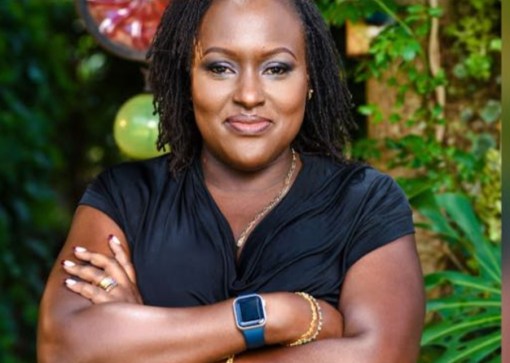
IG: @breakfastwith_Julie TikTok: @breakfastwithjulie FB: @breakfastwithjulie YT:@breafastwithjulie
“I can manage on my own.”
“I don’t need to rely on a man for my emotional well-being.”
There is something deeply empowering about being able to say these things.
And yet, I wonder what happens when independence becomes more than a strength. What happens when it becomes a defence?
Typically, when we think about independence, particularly in women, we picture a familiar stereotype: a well-educated woman, single or divorced, with or without children, who has learned to navigate life largely on her own.
She may be straddling the demands of working life, managing a home, making time, however limited for ageing parents, building a career, pursuing further education, maintaining her health and wellbeing, and creating the comforts she wants for herself: perhaps even the increasingly popular promise of a “soft life.”
Her bedside drawer might contain the latest gadgets to ensure her libido is attended to regularly. She has friends. She has a career. She has interests. She travels. She can assemble furniture, change a tyre, make decisions, manage her finances and, when necessary, comfort herself.
She is capable.
She is self-sufficient.
She is, in many ways, exactly the woman we have encouraged her to become.
So why might this woman struggle to be partnered?
Is independence celebrated or is it, sometimes, quietly penalised?
When “I Don’t Need You” Becomes “I Can’t Need You”
There is an important distinction between not needing someone to survive and being unable to need someone emotionally.
Healthy independence says:
“I can take care of myself, and I can also allow you to take care of me sometimes.”
Defensive independence says:
“I can take care of myself, so I don’t need you to take care of me.”
The difference may sound subtle, but emotionally it is enormous.
The independent woman may have learned, through experience, that relying on others can be disappointing. Perhaps people have let her down. Perhaps she has spent years being the dependable one the person everyone calls when there is a crisis, the one who holds things together.
Eventually, competence becomes armour.
She stops asking.
She stops expecting.
She stops needing.
And because she has become very good at doing everything herself, she may no longer know how to let someone into the parts of her life where she is vulnerable.
The Paradox of Independence
There is a curious paradox here.
We tell women: Be strong. Don’t settle. Don’t depend on a man. Build your own life. Know your worth.
And I agree.
But perhaps we have confused self-sufficiency with emotional freedom.
You can be financially independent and emotionally defended.
You can be fiercely capable and deeply lonely.
You can have an extraordinarily full life and still struggle to make space for another person within it.
The question isn’t whether a woman can manage without a partner.
Of course she can.
The more interesting question is:
Can she make room for a partner without experiencing that need as weakness?
The Fear Beneath the Strength
Sometimes independence protects us from the vulnerability of needing another person.
Because needing someone gives them the possibility of disappointing us.
It means allowing someone to matter.
It means surrendering some control.
It means saying, “I can’t do this alone,” or “I need you,” or simply, “I missed you.”
For someone who has spent years proving that she can cope, those words can feel surprisingly exposing.
And perhaps this is where independence becomes a defence.
Not because the woman doesn’t want intimacy.
But because intimacy requires something independence has taught her to avoid:
dependence.
Not complete dependence. Not losing herself. But the healthy, mutual dependence that allows two adults to lean on one another without either person disappearing.
Partnership Is Not Rescue
None of this means that an independent woman should suddenly become dependent on a man.
Quite the opposite.
A healthy partnership isn’t about being rescued.
It is about being accompanied.
There is a profound difference between:
“I need you because I cannot cope without you,”
and:
“I don’t need you to survive, but I want you in my life. I want to share things with you. I want to be known by you. I want to be able to lean on you sometimes.”
Perhaps that is the balance many of us are looking for.
Not independence or intimacy.
But independence within intimacy.
So, Is Independence Penalised?
Perhaps sometimes it is.
There are certainly social expectations around gender, partnership and what women “should” need from men.
But I think there is another question worth asking.
Are some of us so determined never to need anyone that we inadvertently make it difficult for anyone to become truly close to us?
Because there is a difference between having strong boundaries and having impenetrable walls.
Boundaries say:
“This is who I am, and this is how I expect to be treated.”
Walls say:
“You cannot get close enough to hurt me.”
The first protects our dignity.
The second may protect our wounds.
Perhaps the goal isn’t to become less independent.
Perhaps it is to become secure enough in our independence to allow ourselves to need someone without losing ourselves.
To say:
“I can manage on my own.”
And, at the same time:
“I don’t always want to.”
Because perhaps the most powerful form of independence is not needing to prove that you can do everything alone.
It is knowing that you can and choosing to let someone stand beside you anyway.

